










Designed and delivered by Antonio Maria Guerra, founder of IntelliGuide.it, the ‘Artificial Intelligence for Business’ course progressively guides staff through the knowledge and practical use of this new technology: a tool capable of delivering concrete, measurable benefits. Available both in-person and online, the training program aims to integrate Artificial Intelligence into everyday workflows as a valuable ‘operational ally’.
The ‘Artificial Intelligence for Business’ course, designed by Antonio Maria Guerra, AI Specialist and founder of IntelliGuide.it, is aimed at offering companies a significant boost in productivity through this new technology.
The training is addressed to internal staff and is based on a training material composed of hundreds of multimedia slides, rich in real-world examples, with an approach focused on the practical use of AI in everyday work.
Substantial space within the program is dedicated to use cases directly transferable to the business context, with results noticeable as early as the first weeks following the training: the company will be able to count on staff capable of employing Artificial Intelligence as an everyday operational tool, both in support of activities and decisions.
Below, a brief overview of the content of the various modules that make up the program.
The main objective of this course about Artificial Intelligence is to deliver tangible and measurable benefits, such as:
MAIN MODULES
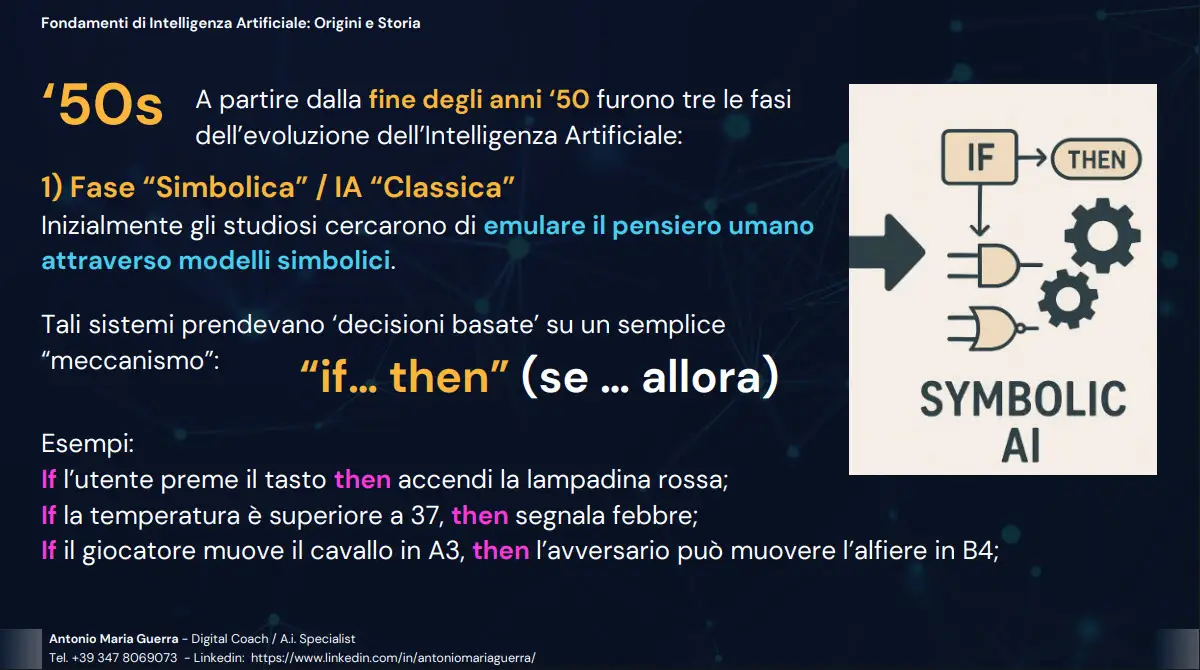
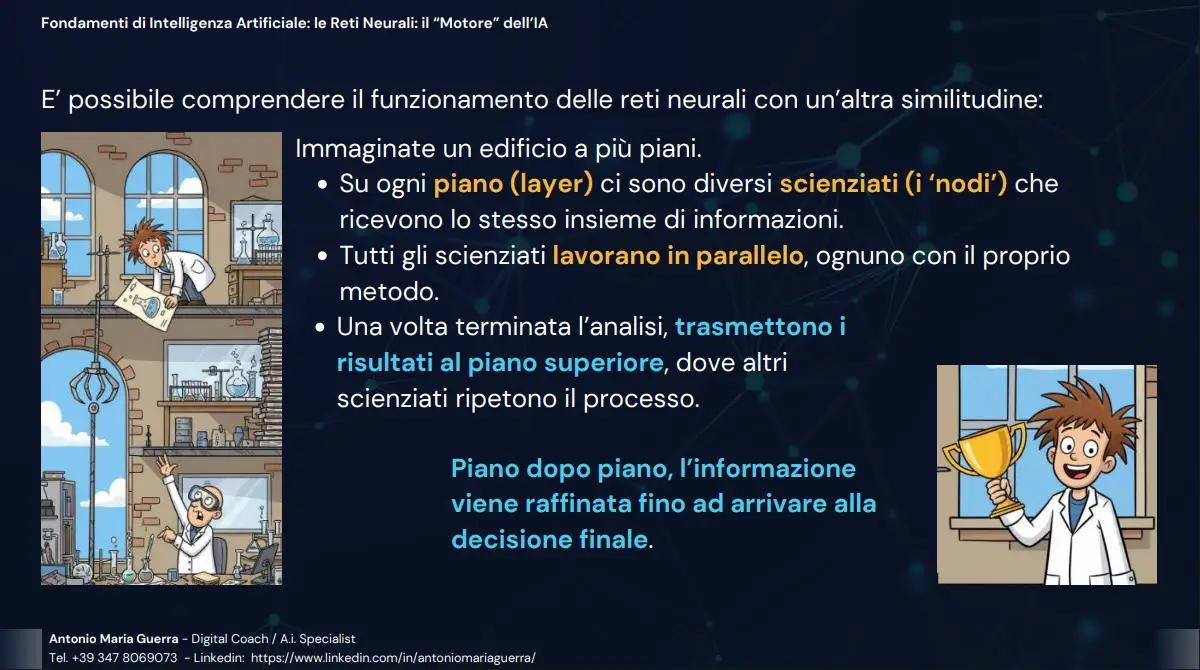
Questo modulo è studiato per spiegare ai partecipanti cosa è l’Intelligenza Artificiale e le basi teoriche per gestire questa nuova tecnologia al meglio. L’approccio didattico è accessibile ed intuitivo, facendo un largo uso di immagini e video illustrativi: il suo obiettivo è far comprendere, nel concreto, che la IA, lungi dall’essere un ‘oggetto misterioso’, può essere effettivamente un formidabile strumento per incrementare la produttività.
Nel dettaglio, le slides del modulo illustrano:
Module 01: a few sample slides.
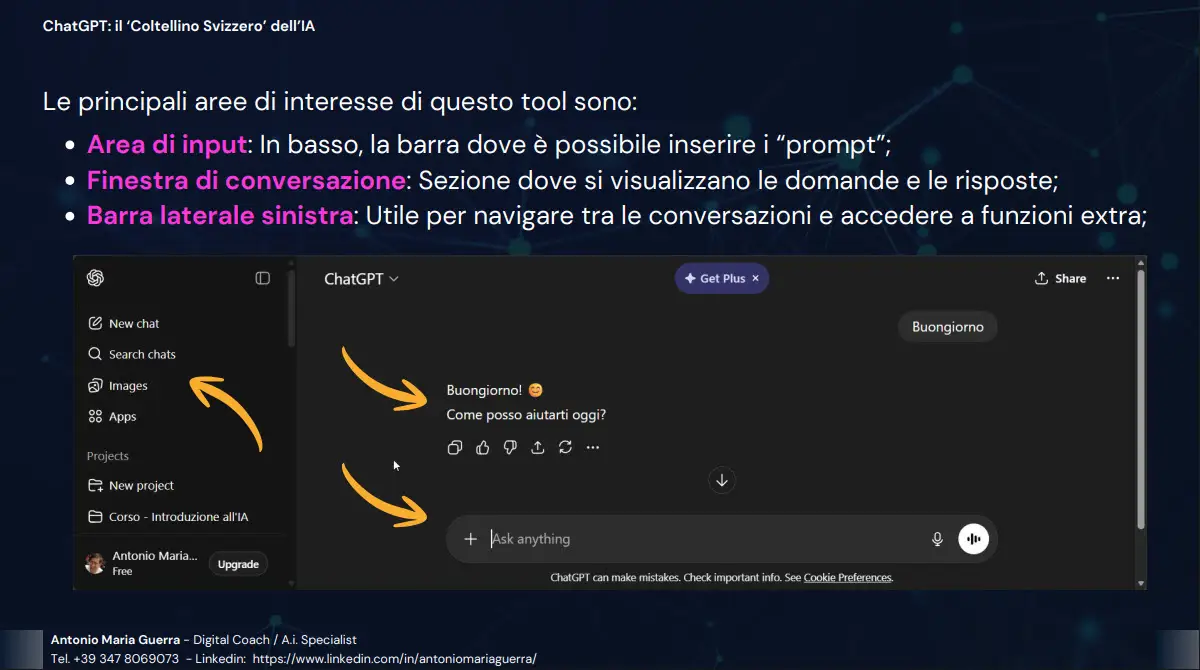
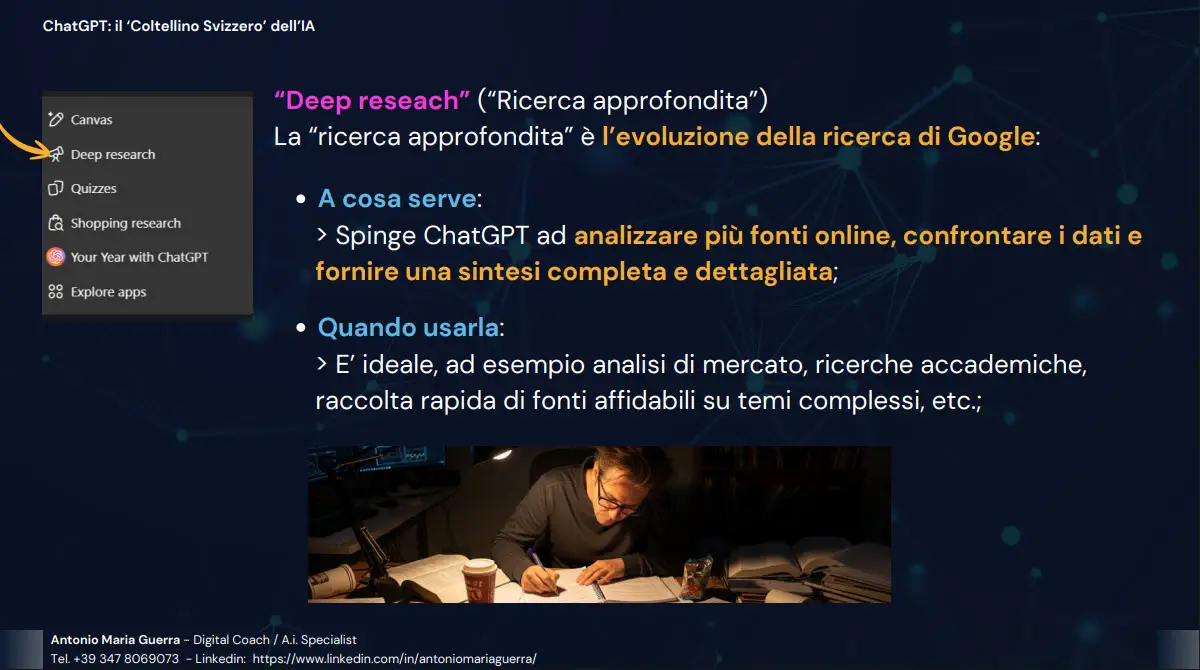
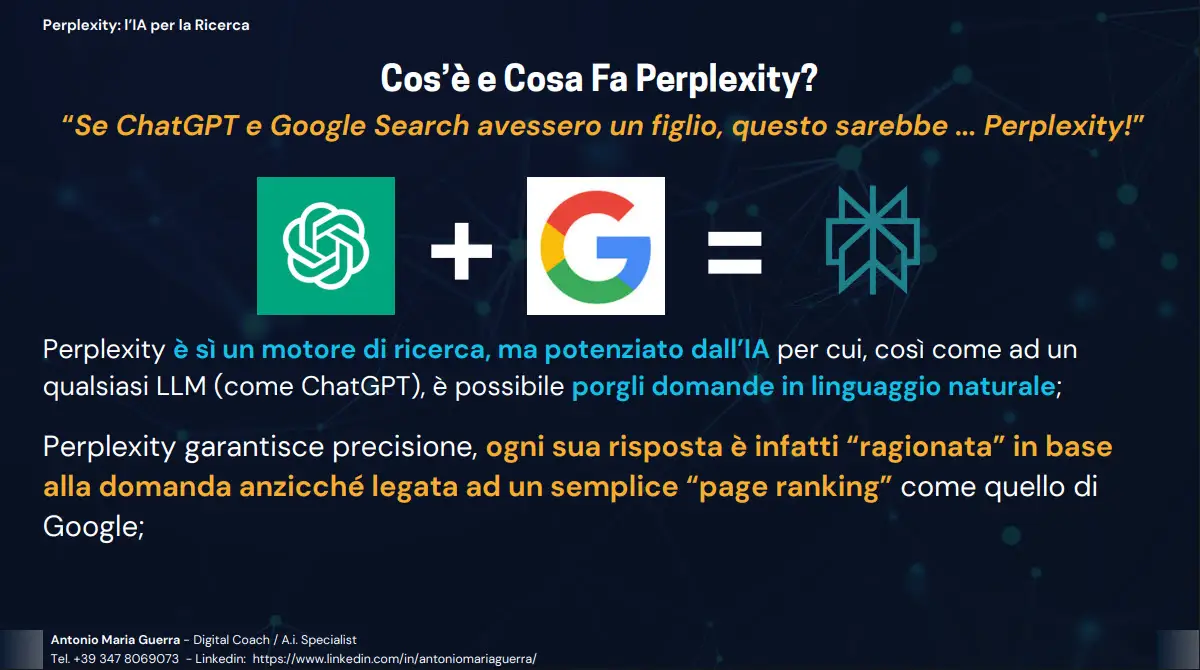
This module is designed to introduce participants to the main ‘general-purpose’ Artificial Intelligence tools, in the context of everyday office work.
Making extensive use of images, videos and practical examples, the module’s slides cover:
Module 02: a few sample slides.
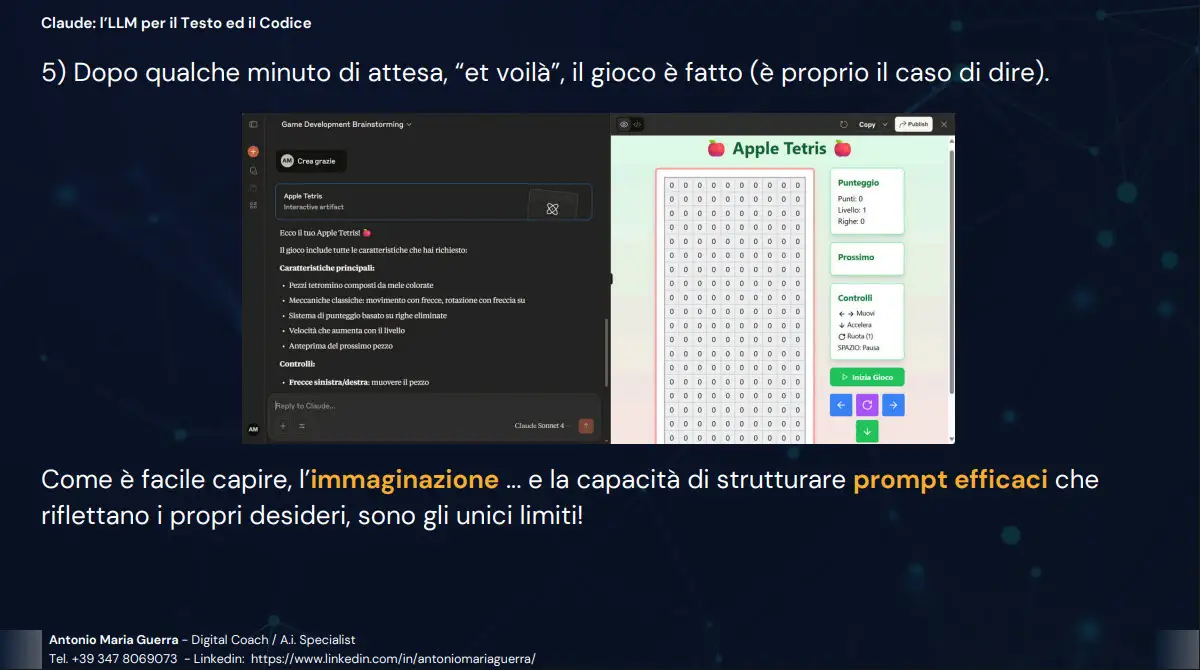
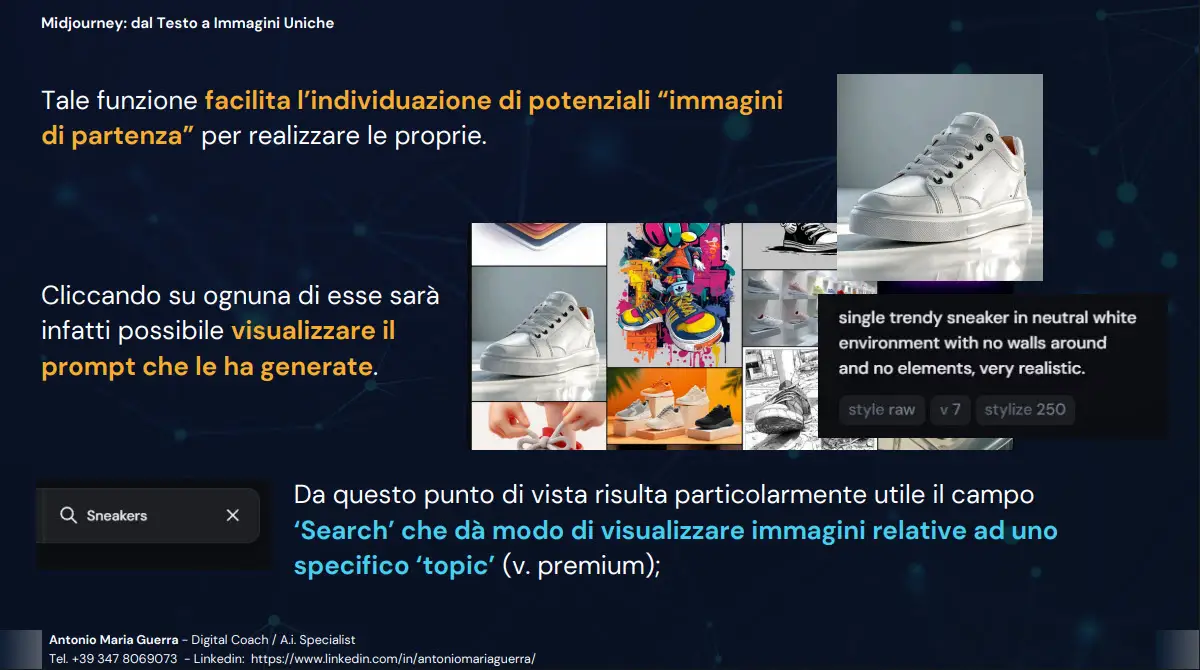
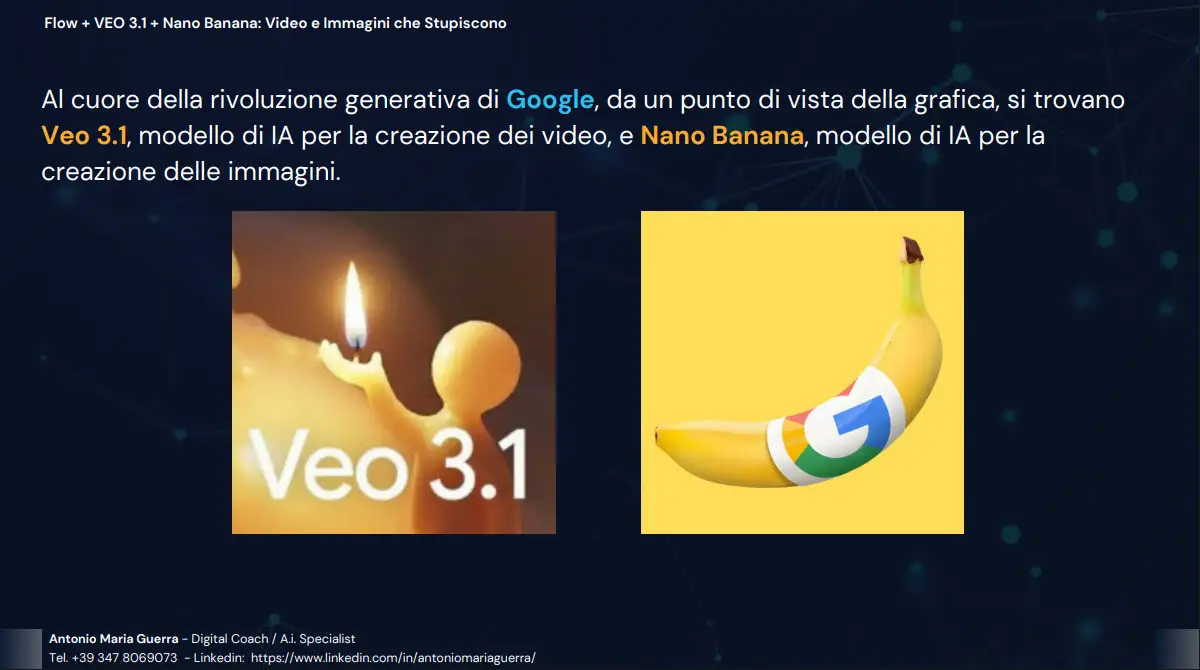
This module is designed to introduce participants to the main tools linked to ‘Generative’ AI, capable of producing virtually any type of content for the most varied business contexts.
Making extensive use of images, videos and practical examples, the module’s slides cover:
Module 03: a few sample slides.
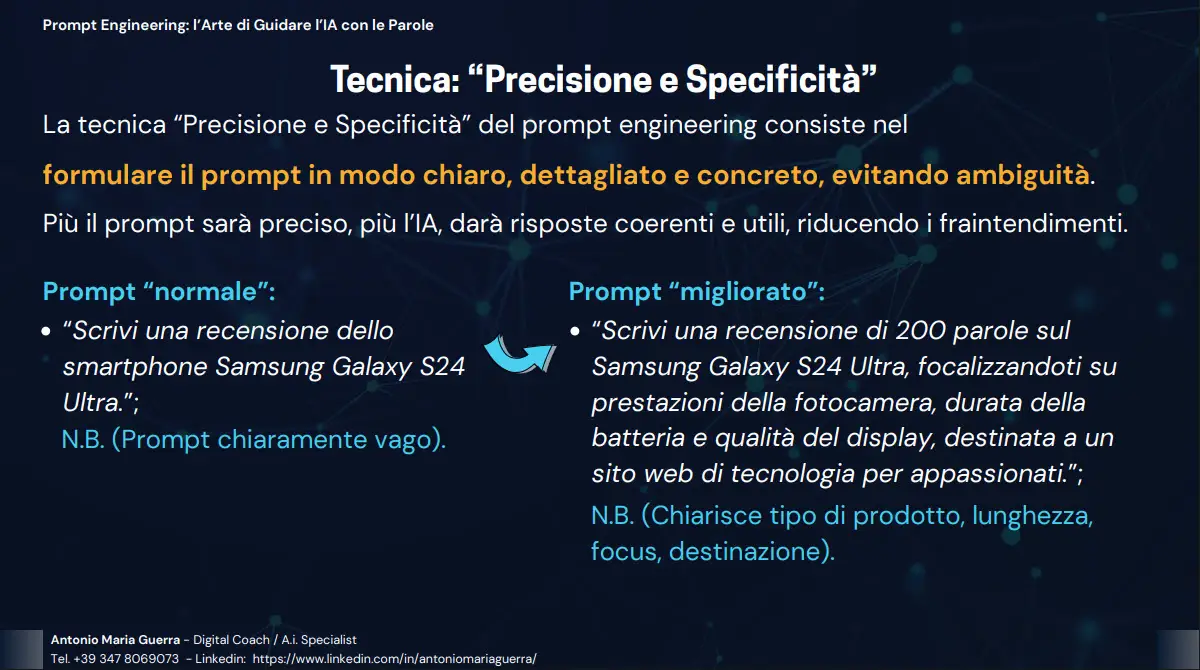
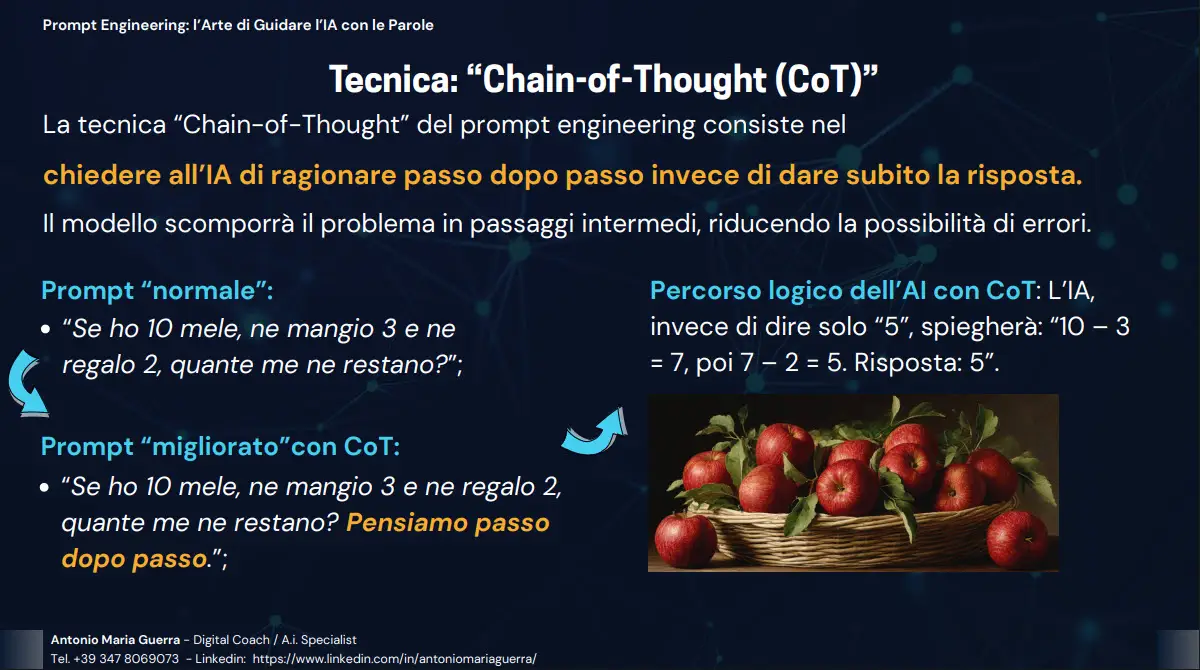
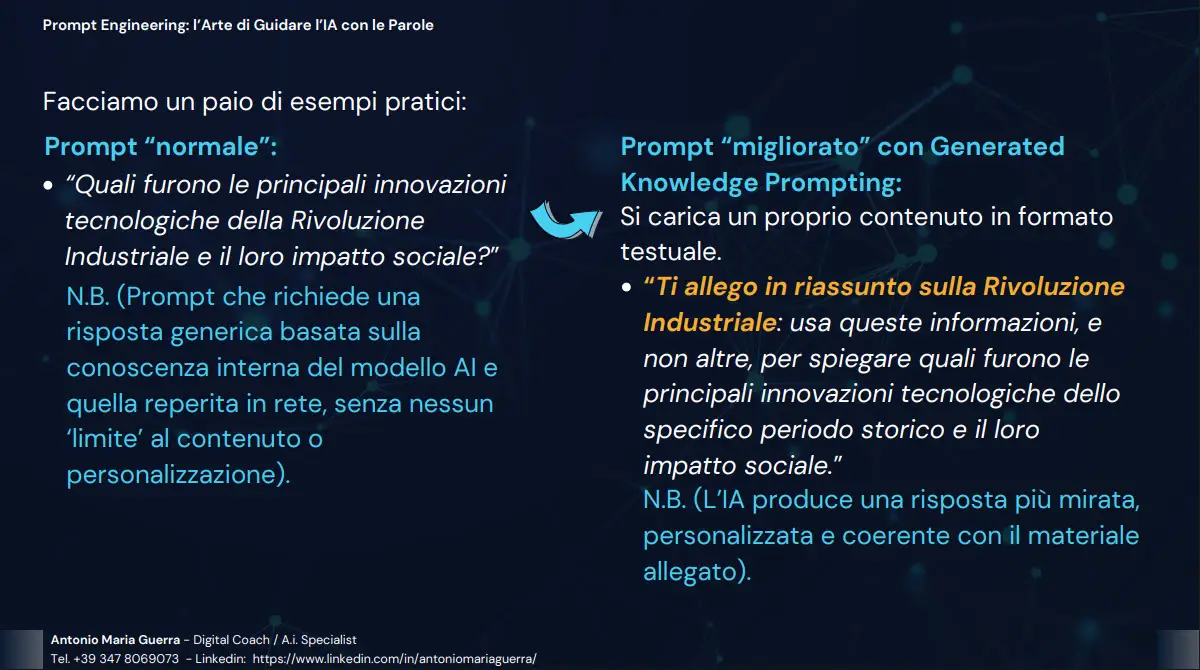
This module is designed to explain to participants the most effective techniques for crafting prompts, the text commands used to interact with generative AI tools, in order to unlock their full potential.
The slides cover in detail the 13 best practices for formulating clear and targeted requests, including:
…and many other techniques immediately applicable in everyday work contexts.
Module 04: a few sample slides.
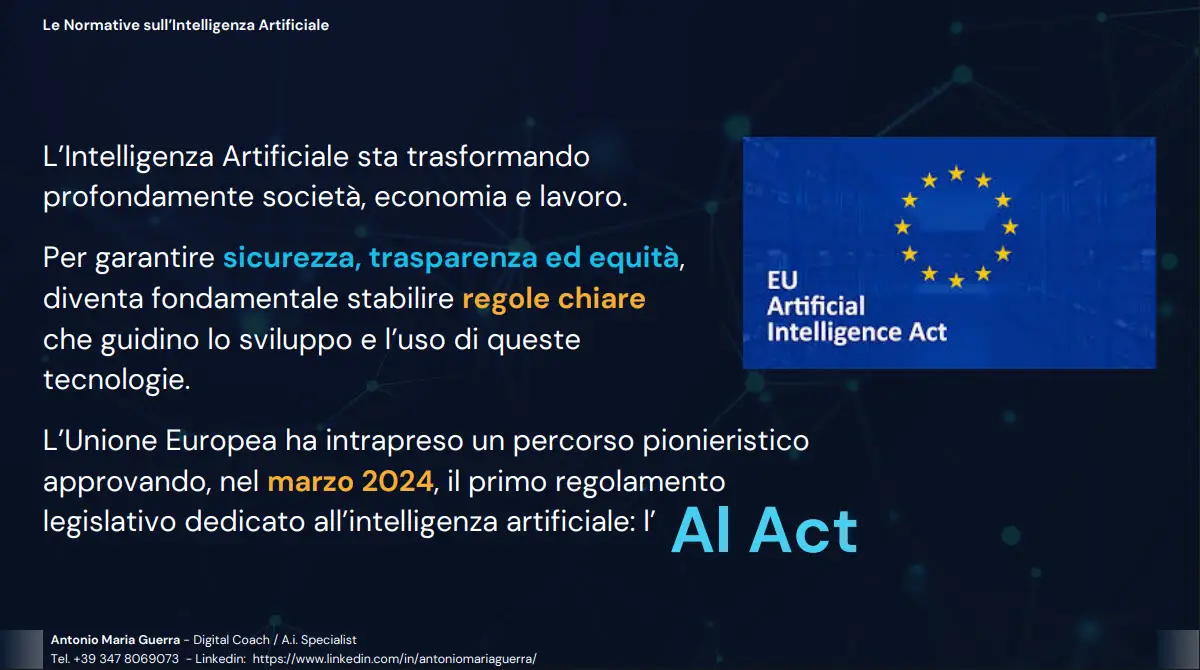
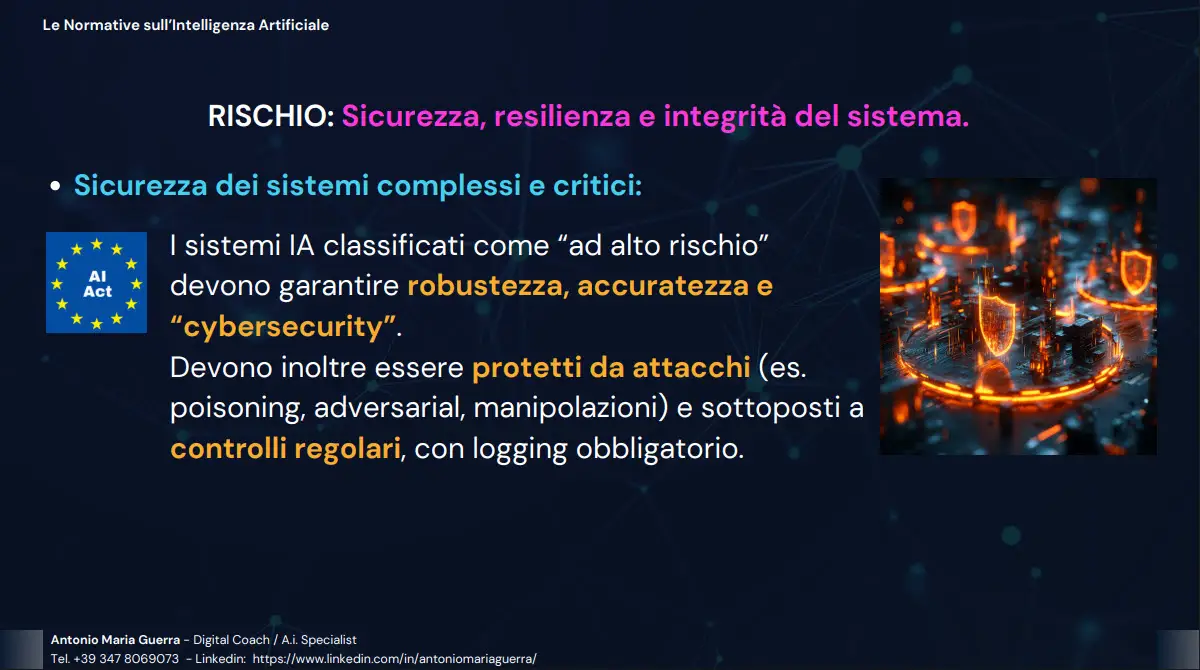
This module is designed to explain to participants the European legislation on Artificial Intelligence, with particular focus on the AI Act and the most recent regulatory trends at international level: knowledge that is essential, among other things, for operating in a work environment defined by compliance with privacy law.
Module 05: a few sample slides.
SPECIALIST MODULES (OPTIONAL)
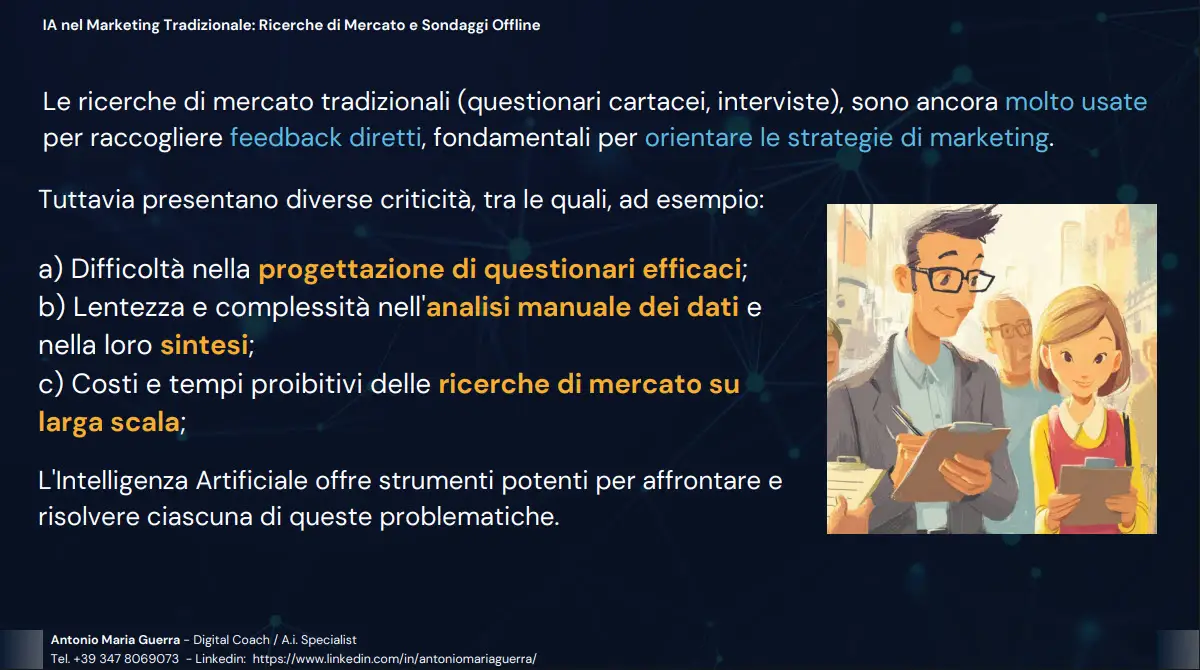
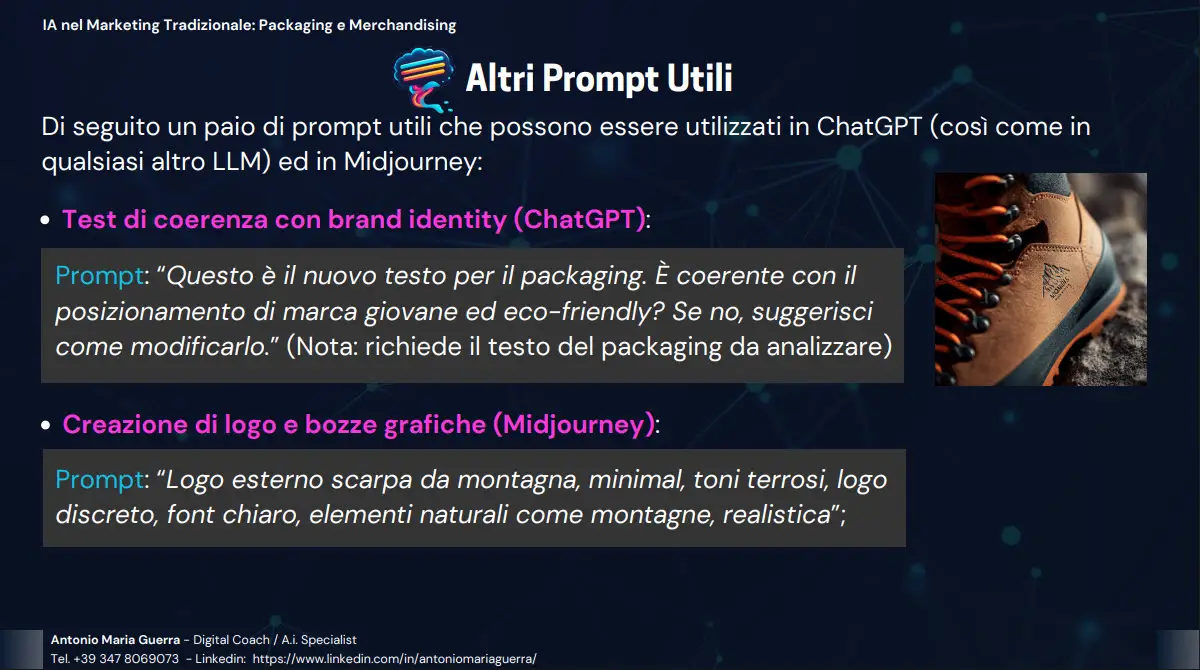
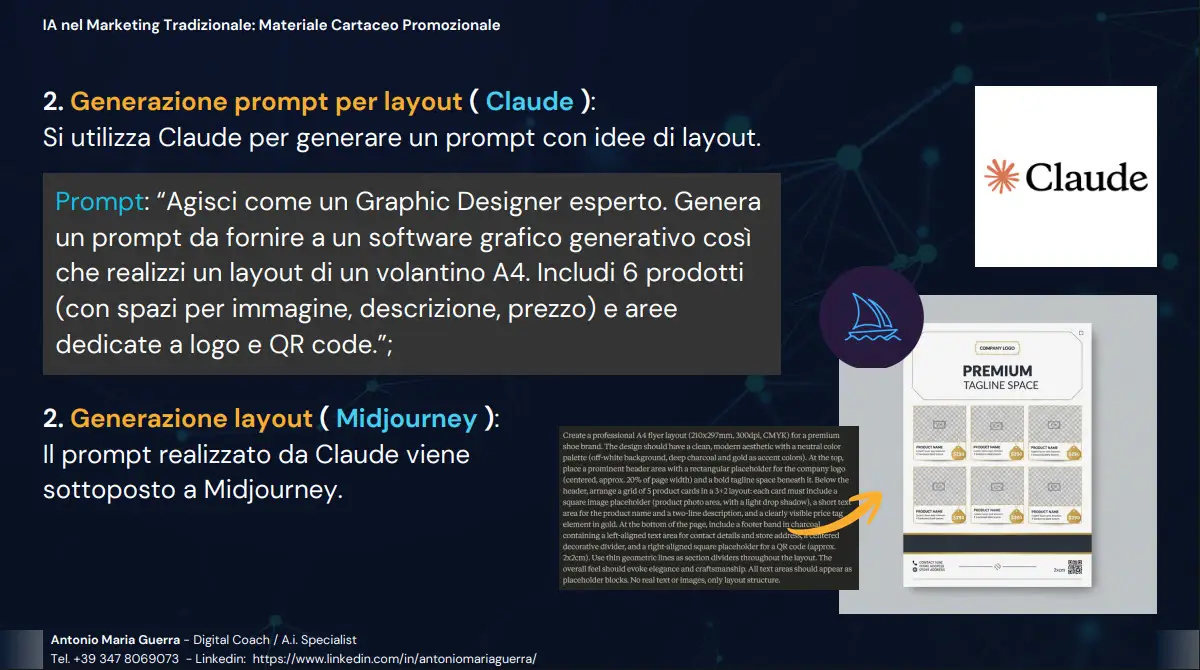
This module is designed to explain how to use ‘general-purpose’ AI tools to optimize the daily work of the traditional marketer. For each of the sections it covers, the main challenges of the specific area are identified along with how to overcome them through this new technology, including practical examples, specialist software references and well-known case studies.
Topics covered:
Analysis and Strategy:
Creation and Personalization:
Distribution and Conversion:
Measurement and Loyalty:
Specialist Module 01: a few sample slides.
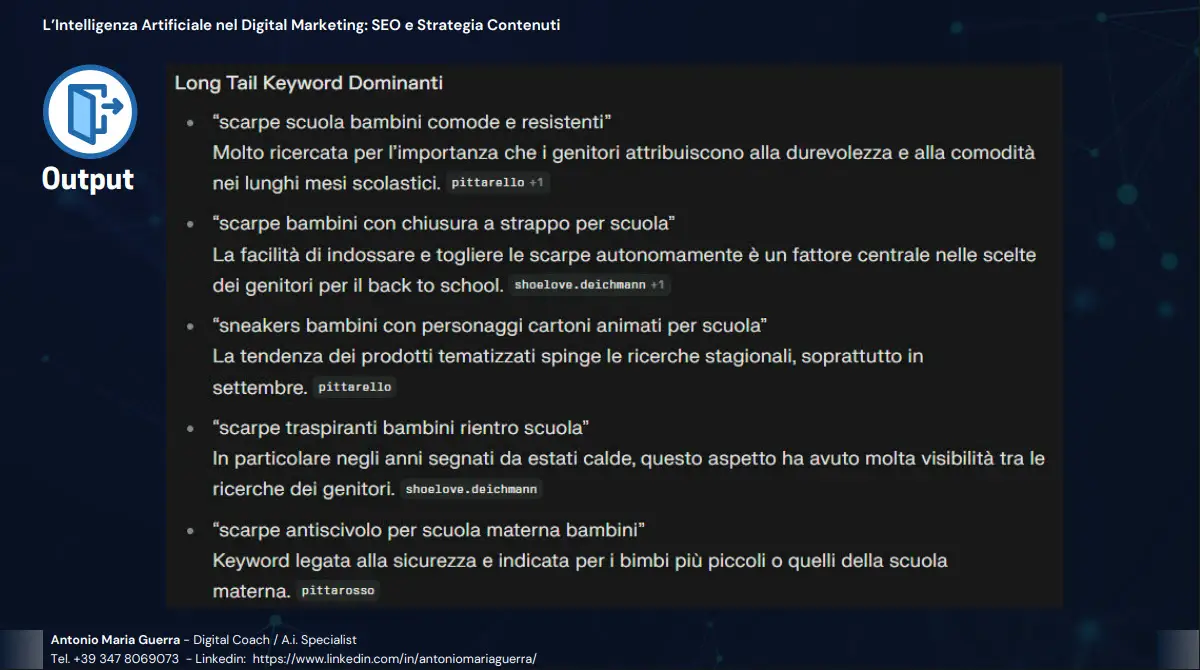
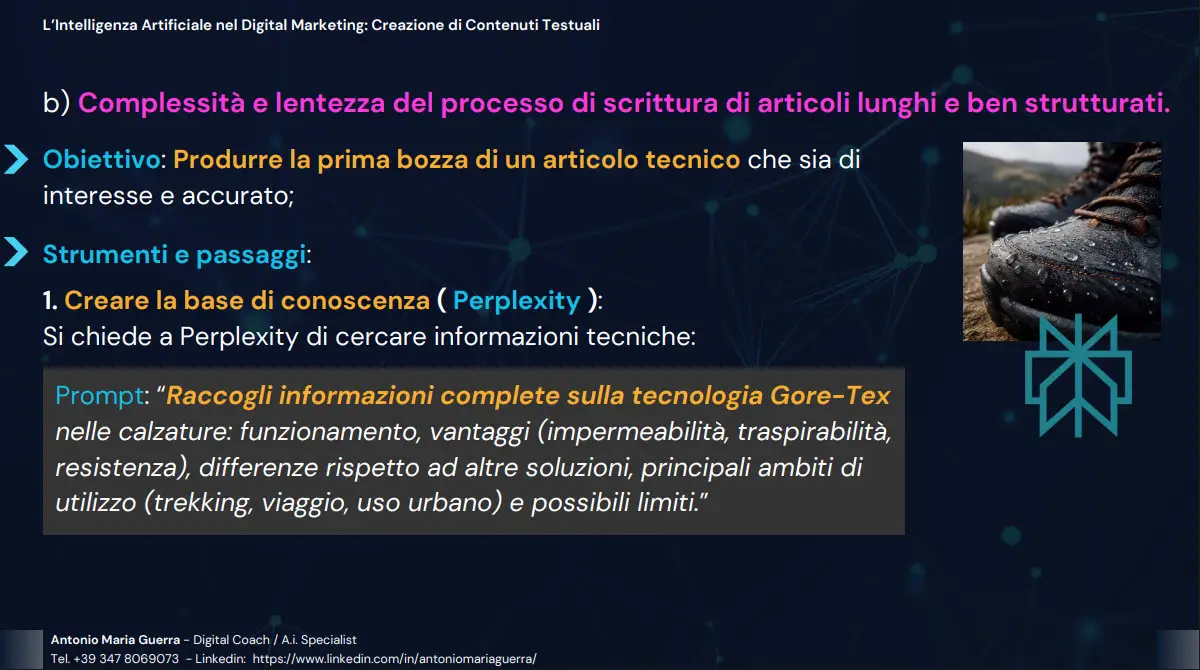
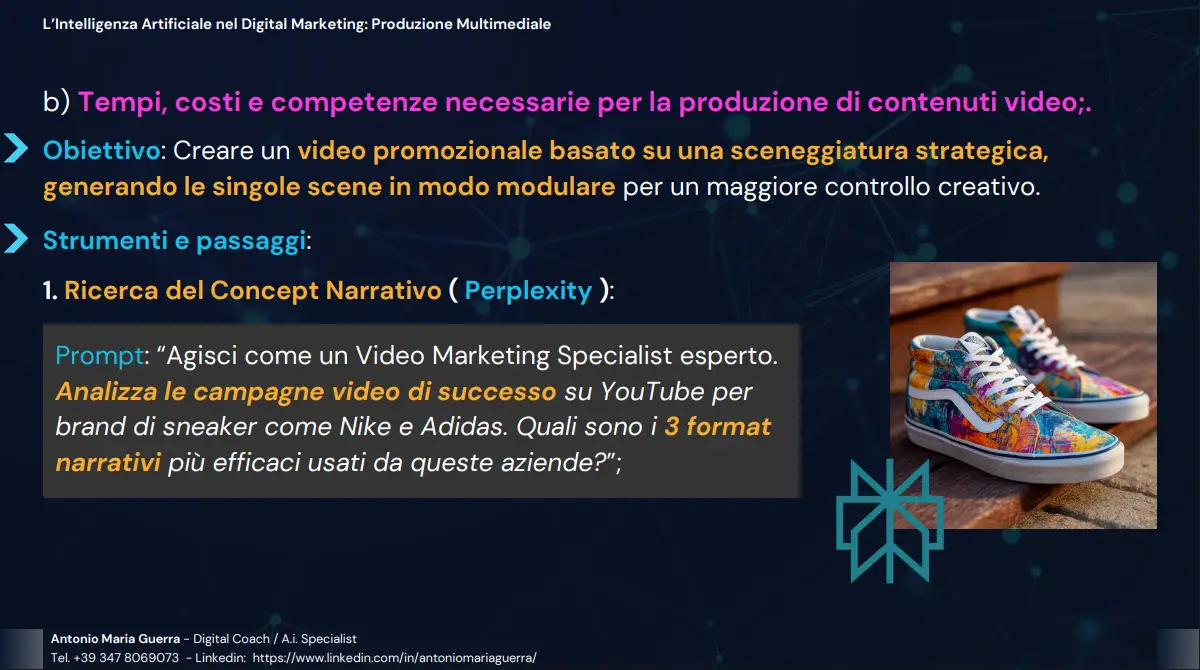
This module is designed to explain how to use ‘general-purpose’ AI tools to optimize the daily work of the digital marketer. For each of the sections it covers, the main challenges of the specific area are identified along with how to overcome them through this new technology, including practical examples, specialist software references and well-known case studies.
Topics covered:
Analysis and Strategy:
Creation and Personalization:
Distribution and Conversion:
Measurement and Loyalty:
Specialist Module 02: a few sample slides.
The images on this page were created using generative Artificial Intelligence tools.