
Artificial Intelligence for Doctors:
a Revolution in Healthcare
What does it mean, today, to be a doctor in the age of Artificial Intelligence? The transformation brought about by this new technology is profound and touches every aspect of the profession: from tools to bureaucracy, from clinical responsibility to the relationship with patients. In this article we will explore the extraordinary opportunities of such an innovation for those who provide care, without overlooking the risks that its careless use could bring.
( by: Antonio Maria Guerra | date: 14/04/2026 )

AI: an epochal turning point for an ancient profession?
Medicine is one of the oldest disciplines ever practiced by human beings. Born from the empirical observation of nature and refined over millennia, it has traversed countless scientific revolutions, emerging each time both renewed and faithful to its own essence: the care of people. Today, however, something different is happening. The entry of Artificial Intelligence into medical practice does not simply represent a new tool added to the clinician’s kit, but a paradigm shift capable of redefining the way a doctor studies, works, decides and relates to patients. A transformation that, according to many experts, could prove to be the most significant in the history of the profession. Not without risks, certainly, but undoubtedly rich in extraordinary opportunities.

AI fighting an invisible enemy: the bureaucracy that is overwhelming doctors.
Few professions know the paradox lived daily by the contemporary doctor: years of training with the goal of caring for people … only to spend most of their working time in front of a screen entering data, managing prescriptions and, more generally, producing administrative documentation. In Italy, for example, according to recent surveys, over 80% of general practitioners cite bureaucratic workload as their primary source of professional dissatisfaction.
Read more
This explains why a twenty-minute specialist appointment reserves, on average, if all goes well, only five minutes of real ‘attention’ for the patient. It is precisely in this scenario that Artificial Intelligence, far from being a threat to the profession, presents itself as a concrete response to a structural problem that has been pushing doctors towards burnout for years. It can in fact automate everything that is repetitive, giving back time to the care, in every sense, ‘of’ the patient and above all ‘for’ the patient.
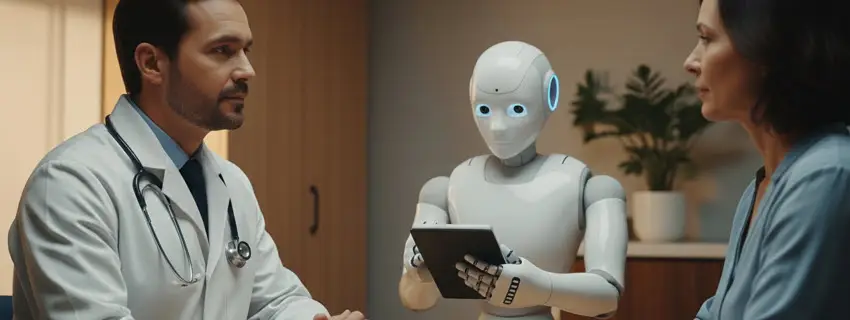
AI takes notes and the doctor goes back to listening.
Imagine a medical appointment where the doctor never once touches the keyboard. No notes to enter, no records to compile in real time, no distracted glances at the screen: just full attention to the person sitting across from them. This is not science fiction, but the reality already being experienced by thousands of professionals in the United States, thanks to the ‘AI Scribes’. These are Artificial Intelligence-based systems that, with the patient’s prior consent, listen to the entire conversation during the clinical encounter and, through advanced voice recognition and natural language understanding, are able to distinguish the doctor’s voice from the patient’s, extract clinically relevant information and automatically generate a structured draft of the appointment.
Read more
The result? Professionals who adopt these tools intensively save a great deal of time on clinical documentation, with a proportional increase in the attention devoted to people. In Europe, the process is slower due to stringent privacy regulations — the GDPR imposes precise constraints on data processing on non-European servers — but the direction is nonetheless clear. Freeing doctors from bureaucracy means, once again, giving patients back a truly present interlocutor.

When the machine ‘studies’ ... faster than the doctor!
Every day, an impressive volume of scientific articles is published in the medical field worldwide. A body of knowledge that no human being, however brilliant and dedicated, could reasonably absorb over the course of an entire career, let alone in real time! And yet, keeping up to date with the latest scientific evidence is not a ‘luxury’ for the doctor, but a precise responsibility towards their patients. Historically, the gap between a scientific discovery and its adoption in everyday clinical practice has been estimated at around 17 years: an unacceptable delay that has often meant less effective treatments than research would have already allowed.
Read more
Artificial Intelligence is changing all of this radically: tools such as Consensus AI are capable of scanning millions of scientific publications in a matter of seconds, synthesizing the most up-to-date evidence and returning precise answers to doctors, complete with verifiable sources. We are on the threshold of a true revolution, in which an increasingly modern and ‘responsive’ medicine will be capable of bringing innovation from the laboratory to the clinic in timeframes that until recently would have seemed unthinkable.

Vertical tools: why ‘ChatGPT’ alone is not enough.
When facing a complex clinical decision, a doctor relying on a general-purpose Artificial Intelligence tool — such as ChatGPT, Claude, Gemini, etc. — would be doing the equivalent of consulting a universal encyclopedia instead of a specialist textbook. The tool, it is true, knows something about everything, but generally not enough about medicine — although this gap is set to narrow. This is why the clinical world is rapidly moving towards so-called ‘vertical’ platforms: AI systems trained exclusively on certified medical sources, international guidelines and scientific literature subject to continuous review and updates.
Read more
Two prime examples: Consensus AI, capable of analyzing hundreds of millions of scientific publications and returning responses based exclusively on documented evidence, and Open Evidence, already integrated into the electronic health records of some of the most important American hospitals, providing doctors with real-time updated decision support. In Italy, too, first steps are being taken in this direction: MIA (Medicine and Artificial Intelligence), a platform developed under the PNRR (National Recovery and Resilience Plan), entered its trial phase in 2026 across 1,500 general practice surgeries, with the aim of becoming a clinical consultation tool for family doctors throughout the country.
The ‘informed’ patient: from ‘Doctor Google’ to pocket AI.
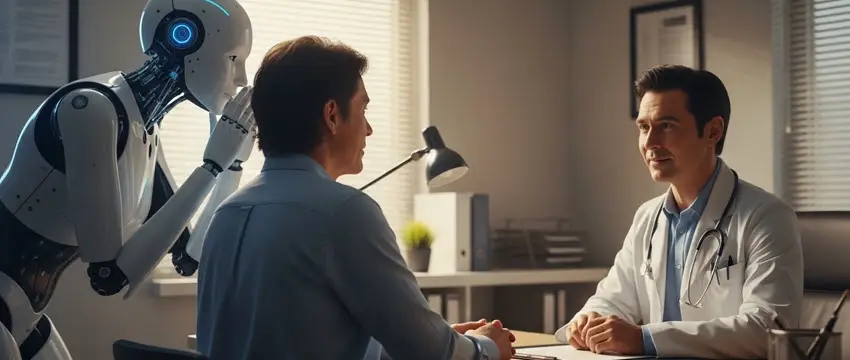
Admit it: how many of you have never looked up your symptoms on Google before seeing a doctor? The so-called ‘Doctor Google’ phenomenon has accompanied the internet age since its very beginning, bringing to surgeries patients convinced they had the most varied conditions … ‘diagnosed’ on the basis of often superficial online searches. With the advent of Artificial Intelligence, however, something has changed: today a growing proportion of people arrive at their medical appointment having already consulted language models (such as ChatGPT, Claude, Gemini, etc.), obtaining articulate and apparently authoritative responses about their health condition.
Read more
In some cases this ‘evolution’ is undoubtedly positive: a patient who better understands their clinical situation tends to be more collaborative and more inclined to follow treatment. In others, however, the risk is that of self-diagnosis — blindly (and recklessly) trusting a system that has no knowledge of the person’s complete medical history, their life context or their ongoing therapies. The doctor thus finds themselves facing a better-informed interlocutor, but one who can sometimes be difficult to manage, especially when the conclusions they have reached ‘independently’ diverge from the professional clinical assessment. A new challenge that, without doubt, requires ever more refined communication skills from healthcare professionals.
Beware of ‘automation bias’: judgment must remain human.
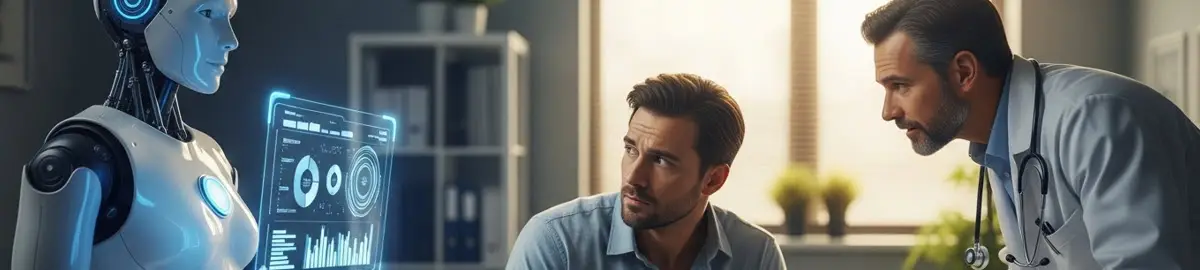
There is no point in denying it: the more a technological system appears precise and objective, the easier it is to trust it blindly. This psychological mechanism lies at the heart of what experts call ‘automation bias’: the human tendency to delegate one’s critical thinking to an automated tool, accepting its conclusions without the necessary intellectual filter. In the medical field, this risk takes on a particularly delicate dimension. An algorithm, however sophisticated, operates on statistical data and probabilities: it does not know the patient in their entirety, it does not perceive their emotional history, it does not pick up on the nuances that emerge from a glance or a pause in the telling. The doctor, on the contrary, is the only one capable of integrating objective data with the specific human context of the person in front of them. Let us be clear: no Artificial Intelligence system today assumes legal or moral responsibility for the consequences of a clinical decision. That responsibility always and in any case belongs to the professional. Using AI as a decision-support tool is therefore an extraordinary resource, but relying on it as a final judge would be a mistake no patient should have to bear. Technology suggests, but only the doctor can decide.

Privacy and health data: the line that must not be crossed.
Among all the personal data we produce on a daily basis, there is no doubt that health data is the most sensitive and dangerous: it contains information concerning our biology and vulnerabilities: our most intimate characteristics … and for this very reason deserves absolute protection. Yet, carried along by the great enthusiasm for the new possibilities offered by Artificial Intelligence, a progressive decline in vigilance is taking place: medical reports, blood tests and clinical records are being uploaded without a second thought to general-purpose platforms not certified for medical use, entrusting extremely delicate information to systems that could store it, process it and, in some cases, use it for purposes that go well beyond answering our question.
Read more
The risk is not theoretical: there is already open discussion about how health data voluntarily shared by users could become the subject of commercial profiling and targeted advertising. In Europe, the GDPR offers significant protection, but does not resolve the problem at its root, as long as many AI platforms process data on servers located outside the continent’s borders. The advice to follow is simple but fundamental: it’s perfectly fine to use Artificial Intelligence to better understand one’s health, to translate medical language into accessible terms, to prepare for an appointment. But it is never a good idea to entrust it with one’s most precious data, at least not without first carefully verifying where and how it is being processed.

The doctor of the future: more human thanks to the machines.
For centuries, the figure of the doctor has been associated with that of a professional possessing an almost encyclopedic knowledge, capable of remembering dosages, pharmacological effects, therapeutic protocols and even past interactions with patients. An extraordinary competence, earned through years of study and refined through experience. Today, however, the purely mnemonic and technical component is set to become less and less exclusive to the human professional… because, it is hard to deny, Artificial Intelligence handles it better and faster. What no algorithm will ever be able to replicate, on the other hand, is the ability to look a frightened patient in the eye, to find the right words to communicate a difficult diagnosis, to pick up on that human detail that transforms an appointment into an authentic act of care.
Read more
The doctor of the future will therefore be less of an ‘encyclopedist’ and more of an interpreter and communicator. Artificial Intelligence, freeing them from the burden of bureaucracy and constant mnemonic updating, will give back the time and energy needed to return to being what medicine has always asked of its finest professionals: an authentic human presence, capable of accompanying people through the most vulnerable moments of their existence. Paradoxically, it will be the machines themselves that make medicine more human.
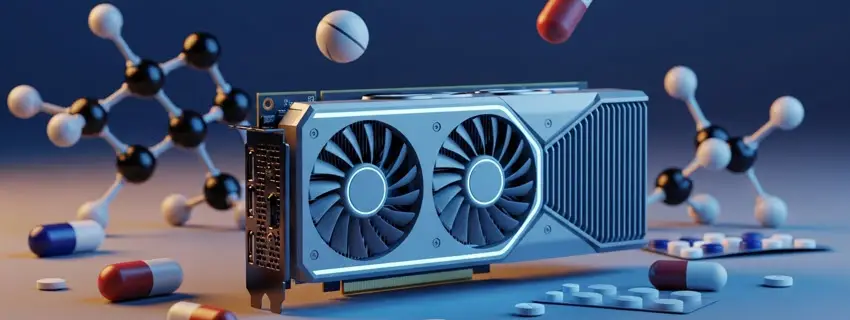
NVIDIA and Eli Lilly: when AI accelerates drug discovery.
January 2026: NVIDIA, manufacturer of the chips that are the ‘engine of AI’, and Eli Lilly, the American pharmaceutical giant known, among other things, for insulin and obesity drugs, announced the creation of a joint laboratory dedicated to applying this new technology to the research and development of new medicines. The planned investment exceeds one billion dollars over five years. The goal is to harness NVIDIA’s GPU computing power to analyze billions of chemical compounds in timeframes unthinkable for traditional research, drastically accelerating a process that today takes an average of over ten years from molecular discovery to clinical approval. An alliance between apparently distant worlds that could forever change the future of medicine.
Copyright information.
The images on this page were created using generative Artificial Intelligence tools.