








The world of Artificial Intelligence moves fast: new models, new applications, new challenges and much more. In IntelliGuide’s news, the main developments in the field are highlighted, selected for what is truly worth knowing.
> APRIL 2026
13 April 2026 – Stanford’s 2026 AI Index captures an Artificial Intelligence in constant acceleration: models keep improving, its adoption is outpacing both the internet and the personal computer, yet society is struggling to keep up.
(Source: MIT Technology Review)
New
8 April 2026 – Meta has unveiled Muse Spark, the first Artificial Intelligence model developed by its new research lab. Proprietary and multimodal, it aims to close the gap with its main competitors: OpenAI, Anthropic and Google.
(Source: CNBC)
New
11 April 2026 – The United Nations’ Independent International Scientific Panel on AI, the first global body of its kind, has launched a landmark study on AI’s impact, with the goal of keeping humans at the center of decision-making.
(Source: UN News)
New
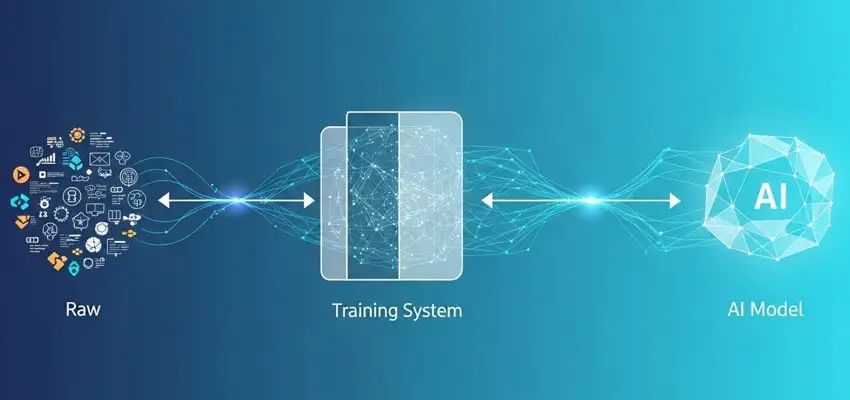
Discovering how Machine Learning works is undoubtedly fascinating. It all begins with the collection of a large amount of information, clearly consistent with the intended goal: this is, in effect, the ‘fuel’ of the entire process.
(read more)
> MARCH 2026
13 February 2026 – Disney sent a cease-and-desist to ByteDance over the unauthorized use of iconic characters in AI-generated content. The move triggered widespread protests across Hollywood, pushing the Chinese company to impose new restrictions on its video tool.
(Source: Axios)
15 February 2026 – OpenAI has hired Peter Steinberger, creator of OpenClaw, with a clear goal: building AI agents capable not just of answering questions, but of planning and executing complex tasks autonomously. Less chatbot, more assistants that act.
(Source: TechCrunch)
25 February 2026 – Google has integrated Gemini into the Samsung Galaxy S26, turning it into an agent capable of performing real actions: ordering food, booking a taxi, managing a shopping list — all in the background while the user does something else.
(Source: CNN)
In the 1960s, Joseph Weizenbaum of MIT created ELIZA, a program that responded to statements like ‘I feel sad’ by asking questions such as ‘Why do you feel sad?’. Despite its simplicity, many people developed an emotional attachment to it. (read more)
The images on this page were created using generative Artificial Intelligence tools.