
The History of Artificial Intelligence:
From Turing to the Present Day
A PATH THAT IS CHANGING THE WORLD
From a decidedly bold idea dating back to the 1940s, to today’s multimodal LLMs, in this article we retrace together the fundamental milestones of the history of Artificial Intelligence: a fascinating path, studded with overwhelming enthusiasm and equally bitter disappointments, of stubborn researchers who never stopped believing in their own intuition and of discoveries that will increasingly change the world around us and the way we relate to it. Bon voyage!
( by: Antonio Maria Guerra | date: 24/04/2026 )
The history of Artificial Intelligence: the roots of a revolution.
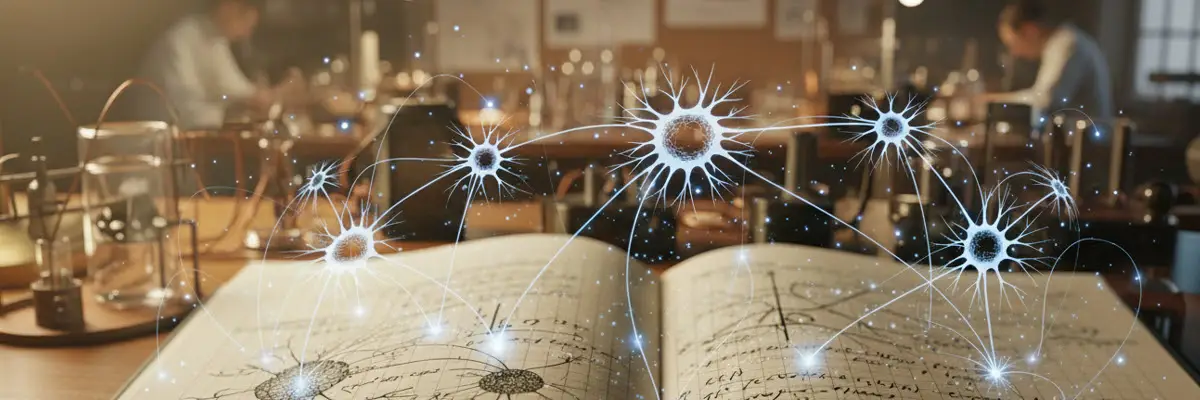
Strange as it may sound to some, the history of Artificial Intelligence does not begin with ChatGPT, far from it. Its roots run deep into a dramatic period of history, one that belongs to our grandparents’ generation: the Second World War. It was 1943 when Warren McCulloch, a neurophysiologist at the University of Illinois, and Walter Pitts, a self-taught logician, published a paper destined to change the course of science forever (*1). The title was undeniably forbidding, “A Logical Calculus of the Ideas Immanent in Nervous Activity”, but the content, on closer inspection, was equally revolutionary: the two researchers proposed that the workings of the human brain’s neurons could be reproduced mathematically, as if they were ‘tiny switches’ capable of turning on and off in response to specific stimuli.
Read more
The intuition was extraordinary: starting from the premise that the human brain functions as a network of interconnected neurons, they introduced for the first time the idea that it might be possible to replicate its mechanism … inside a machine!
Obviously, in 1943, nobody had the computing power or the data needed to put their bold theory into practice, but the seed had nonetheless been planted. And from that seed, decades later, modern ‘Deep Learning’ would grow.
Note:
*1: McCulloch W., Pitts W., ‘A Logical Calculus of the Ideas Immanent in Nervous Activity’, Bulletin of Mathematical Biophysics, 1943.
1943

PODCAST: The History of Artificial Intelligence.

McCulloch and Pitts: two scientists and an idea that would change everything.
Warren McCulloch and Walter Pitts were the protagonists of one of the most fruitful intellectual encounters of the twentieth century: their dialogue gave shape to the earliest theoretical foundations of what we now call Artificial Intelligence.
Read more
In background and temperament, they were two profoundly different people. McCulloch was a neurophysiologist by profession, methodical and firmly rooted in the world of medicine and biology. Pitts, on the other hand, was something harder to define: a young prodigy, largely self-taught, without even a formal academic degree, yet already regarded as a mathematical genius.
It was precisely the combination of these two distant paths, the clinical rigor of one and the logical intuition of the other, that made possible what neither of them could have achieved alone. Together, in 1943, they co-authored one of the most influential papers in the history of science, with over 14,000 documented citations (*1).
Their collaboration grew out of a shared interest: understanding how the human brain processes information, and whether this could be translated into mathematical terms.
A question that seemed purely philosophical but, in their hands, became the starting point of the scientific revolution that would lead to the birth of AI.
Finally, it is worth noting that their work remained in the shadows for decades, regarded, ironically enough, as too abstract to have any practical application. Only many years later, with the advent of sufficiently powerful computers, would the world come to realize that McCulloch and Pitts had been a little too far ahead of their time.
Note:
*1: Citation data from Springer Nature.
1943

When the war accelerated the future.
There is a trait d’union connecting the Second World War to the birth of Artificial Intelligence. In order to decrypt the ciphers of the German army, the Allied governments invested enormous resources in the development of electronic computers. In Great Britain, ‘Colossus’ was born, designed by engineer Tommy Flowers and considered the first programmable computer in history (*1): a machine capable of performing logical operations at speeds incredible for the era.
It was precisely in this context that a young and brilliant British mathematician distinguished himself by devising the ‘Bombe’, the electromechanical device that made it possible to decipher the messages of ‘Enigma’: the sophisticated encryption system used by Germany during the conflict. His name was Alan Turing, and he would go on to play a leading role in the birth of modern AI.
Note
*1: Copeland B.J., “Colossus: The Secrets of Bletchley Park’s Codebreaking Computers”, Oxford University Press, 2006.
1943

Alan Turing: the vision of AI and the famous ‘test’.
The birth of Artificial Intelligence is closely linked to a British mathematician by the name of Alan Turing, a figure who became legendary during the Second World War thanks to his contribution in decrypting the Nazi messages processed by the famous ‘Enigma’ machine. A contribution that, as one can easily imagine, proved decisive for the Allied victory.
And yet, as if he had not already done enough for the history of humanity, in 1950 this ‘genius’ published in the academic journal ‘Mind’ (*1) an article that opened with a question as simple as it was revolutionary: “Can machines think?”.
It seems that a future populated by ‘thinking machines’ was already very clear in his mind at the time.
The fact is that in the same article the scientist introduced to the public the famous ‘Turing Test’, a ‘trial’ based on an intuition as elegant … as provocative: if a machine were able to sustain a conversation with a human being in such a way as to be indistinguishable from another human being, then that machine could be considered intelligent.
Even today, more than seventy years on, this test continues to fuel the debate on what it truly means to ‘think’.
Note
*1: Turing A., “Computing Machinery and Intelligence”, Mind, vol. 59, n. 236, ottobre 1950.
1950
Dartmouth 1956: Artificial Intelligence is officially born.
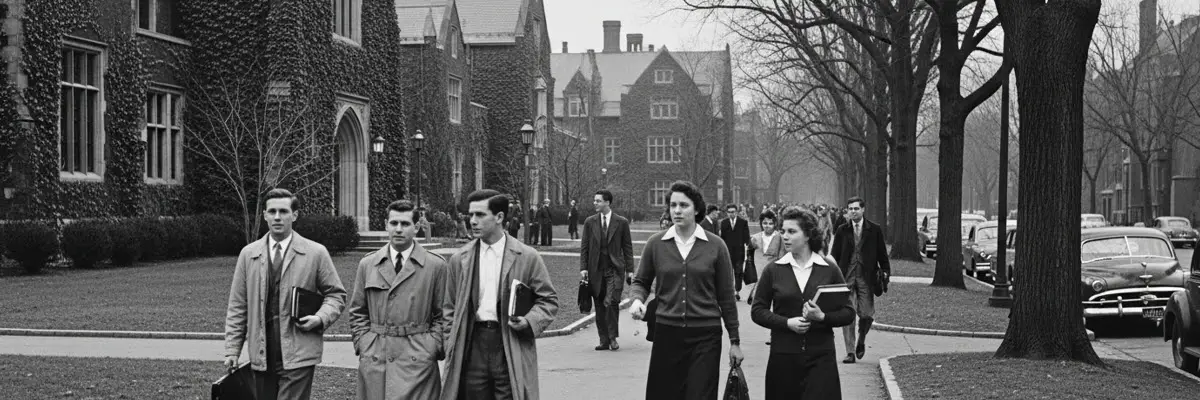
If McCulloch and Pitts had laid the theoretical foundations with their vision of artificial neurons, and Turing had anticipated the concept of ‘thinking machines’, one crucial element was still missing: transforming these visionary ideas into a fully fledged scientific discipline. It was a summer conference in 1956, at Dartmouth College in New Hampshire, that took this decisive step.
The initiative was promoted by John McCarthy, a young professor (… of mathematics, no less), together with Marvin Minsky, Claude Shannon and Nathaniel Rochester (*1): four of the brightest minds of the era. It was precisely on that occasion that the term ‘Artificial Intelligence’, coined by McCarthy in 1955, was officially adopted and defined as the ability of machines to perform tasks characteristic of human intelligence.
Read more
The conference represented, as one might imagine, a foundational moment: for the first time, researchers from different disciplines, mathematics, neuroscience, psychology and computer science, came together around a common goal. After all, the objective of establishing an entirely new scientific discipline was no small ambition.
It should also be noted that among the most ‘concrete’ proposals presented during the event stood out the ‘Logic Theorist’ by Allen Newell and Herbert Simon: a program capable of proving mathematical theorems, considered by many to be the first true Artificial Intelligence software in history. An extraordinary beginning, without doubt, that would open a season of great enthusiasm and equally great expectations for a new, fascinating discipline.
Note:
*1: McCarthy J. et al., “A Proposal for the Dartmouth Summer Research Project on Artificial Intelligence”, 1955.
1956

The (lost) bet at Dartmouth: just one summer to create AI.
There is an interesting detail about the Dartmouth Conference that, nearly seventy years on, still raises a smile. It should be recalled that, in the original proposal drawn up by McCarthy and colleagues (*1), the scientists declared that the most significant advances in the field of Artificial Intelligence would be achieved in the course of a single summer of work. A single summer … to solve one of the most complex problems the human mind had ever faced! Hard to believe. In reality, it would take nearly seventy years …
Read more
without forgetting that ‘the best’, in all probability, is yet to come.
This anecdote speaks volumes about the enthusiasm, seasoned with a touch of naivety, of those extraordinary pioneers, although another reading is possible: the greatest revolutions often arise precisely from those who do not yet know how difficult what awaits them truly is.
Note:
*1: McCarthy J. et al., “A Proposal for the Dartmouth Summer Research Project on Artificial Intelligence”, 1955.
1956

The first steps: the ‘if...then’ approach.
From the mid-1950s through to the 1980s, the dominant paradigm for Artificial Intelligence was what we now call the ‘symbolic’ or ‘deterministic’ approach: the machine followed rules predefined by humans, of the type “if X happens, then do Y” (“if … then”).
An apparently simple idea, yet one that at the time represented an enormous conceptual breakthrough: for the first time, researchers were attempting to translate portions of human reasoning into mathematical language … entrusting them to a machine! Scientists were convinced that, by multiplying and refining these rules, it would be possible to build a tool capable of replicating any form of human intelligence. A remarkable objective, supported moreover by some decidedly encouraging early results.
The structural limitation of this approach, however, was in hindsight and already identifiable: machines simply did what humans had programmed them to do … but nothing more! And the real world, with all its complexity and unpredictability, is well known to resist being confined within a finite set of rules.
1950/80

ELIZA: the first chatbot … that fooled the world!
In 1966, a German-born naturalized American computer scientist by the name of Joseph Weizenbaum, a researcher at MIT in Boston, created something extraordinary: what is today unanimously considered the first chatbot in the history of Artificial Intelligence, named ‘ELIZA’ (*1).
It should be said, in the interest of historical accuracy, that Weizenbaum had no intention whatsoever of creating a chatbot: his goal was rather to build a research tool for studying communication between human beings and machines. The effect he achieved, however, went well beyond his expectations.
Read more
The program was conceptually simple: it analyzed the user’s sentences in search of predefined keywords and rephrased them as questions, simulating a conversation with a psychotherapist. Nothing more. And yet, despite this structural simplicity, ELIZA produced an extraordinary and entirely unexpected effect: many users developed a genuine emotional bond with the program, convinced they were interacting with a presence capable of truly understanding them. Weizenbaum’s own secretary, despite knowing perfectly well how the system worked, went so far as to ask its creator to leave the room so she could converse with ELIZA in private! (*2). An emblematic episode, which speaks volumes about human nature as much as about Artificial Intelligence, and which gave its name to a well-documented psychological phenomenon: the ‘ELIZA effect’, namely the tendency of human beings to attribute understanding and empathy to systems that, in reality, do nothing more than process symbols according to predefined rules. An effect that, as the following decades would demonstrate, would show no sign of fading.
Notes:
*1: Weizenbaum J., “ELIZA: A Computer Program for the Study of Natural Language Communication Between Man and Machine”, Communications of the ACM, gennaio 1966.
*2: Weizenbaum J., Computer Power and Human Reason: From Judgment to Calculation, W.H. Freeman & Co., San Francisco, 1976.
1966

The first ‘AI Winter’: when dreams collided with reality.
Toward the mid-1970s, the enthusiasm that had animated the first decades of the history of Artificial Intelligence collided abruptly with a reality that was hard to ignore: the computers available were not sufficiently structured, and above all powerful enough, to run software capable of fully interpreting the complexity and unpredictability of the real world. Unmet promises therefore accumulated … and with them the frustration of funders. It was no coincidence that in 1974, DARPA, the main research agency of the American Department of Defense, drastically cut the funds allocated to AI development (*1).
Years of stagnation followed: laboratories downsized, doctoral programs hollowed out, researchers forced to reinvent themselves in other fields.
Notes
The very term ‘Artificial Intelligence’ became almost toxic, a source of suspicion in funding proposals, to the point that many scholars began using euphemisms (*2), rather than mentioning it directly. It was the first ‘AI Winter’. It would not be the last.
Notes:
*1: Lighthill J., “Artificial Intelligence: A General Survey”, Science Research Council, 1973.
*2: Euphemisms such as ‘informatics’ or ‘computational intelligence’.
1974

‘Expert Systems’: the comeback of the ‘symbolic’ approach.
Despite the sudden decline of interest in Artificial Intelligence, aptly described as an ‘AI Winter’, a small circle of researchers never stopped working. For this reason, in the 1980s, the new technology returned to the spotlight thanks to a new application of the symbolic approach: the ‘Expert Systems’.
The idea behind their creation was simple: rather than attempting to replicate human intelligence in its entirety, why not focus on specific domains, encoding highly specialized human knowledge through a limited, though by no means modest, set of ‘if…then’ rules? The result were systems that were highly competent, but only within individual fields, such as medical diagnosis, computer configuration, various types of analysis and much more.
Read more
At Stanford University, for example, ‘MYCIN’ was developed (*1), capable of diagnosing bacterial infections and recommending antibiotic therapies with a precision comparable to that of a specialist physician (*2).
‘XCON’, created by John McDermott of Carnegie Mellon University for Digital Equipment Corporation, automatically selected the components needed to assemble customized computer systems (*3).
An encouraging restart, which led major companies and even governments to invest heavily in the sector once again. But this renewed enthusiasm was soon forced, once again, to confront a reality of computers still too underpowered, and systems too rigid to adapt to unforeseen situations.
Notes:
*1: Shortliffe E.H., “Computer-Based Medical Consultations: MYCIN”, Elsevier, 1976.
*2: MYCIN was never adopted in clinical practice for legal and ethical reasons.
*3: McDermott J., “R1: A Rule-Based Configurer of Computer Systems”, Artificial Intelligence, 1982.
1980

Dreyfus: the philosopher who dared to ‘challenge’ AI.
In 1972, the philosopher Hubert Dreyfus published ‘What Computers Can’t Do’ (*1), which was, in effect, a frontal attack on Artificial Intelligence: in the book he argued that it would never be possible to replicate human intelligence, founded on intuition, the body and lived experience … not on symbols and rules. The reaction of the scientific community was decidedly cold: some said his criticisms should simply be ignored, while Dreyfus’s colleagues at MIT went so far as to avoid him in public. And yet, over time, several of his intuitions would prove surprisingly well-founded.
Note
*1: Dreyfus H.L., “What Computers Can’t Do”, Harper & Row, 1972.
1972

The second ‘AI Winter’: the return of old problems.
Between the late 1980s and the early 1990s, Artificial Intelligence went through a second deep crisis. Expert Systems, despite having demonstrated concrete results in narrow domains, progressively revealed their structural limitations: expensive to build and maintain, incapable of learning from experience and therefore unable to cope with any situation not anticipated by their rigid rules. Funding, vital for research, was once again withdrawn, specialized companies closed their doors and professionals in the field were forced toward other areas.
This second ‘AI Winter’ lasted until the early 1990s (*1), proving even longer and more devastating than the first.
And yet, even this time, a silent minority of researchers continued to work, almost in the shadows, convinced that the right path was not that of predefined rules, but something radically different: teaching machines to learn from experience, just as human beings do.
Note
*1: AI winter, Wikipedia.
1980/90

Japan bets everything on AI … and loses.
In the early 1980s, while in the West Expert Systems were achieving their first, unexpected commercial successes, Japan decided to take a risk, playing an even more ambitious game.
It was 1982 when the Ministry of International Trade and Industry (MITI) launched the ‘Fifth Generation Project’: a ten-year programme worth approximately 400 million dollars (*1), with a declared and extraordinarily ambitious objective: to build, by 1992, computers capable of reasoning, understanding natural language and solving complex problems just as human beings do.
Read more
The reaction of Western countries was one of immediate alarm, prompting the United States and the United Kingdom to hastily launch comparable research programmes (*2).
Ten years later, in 1992, the ‘Fifth Generation’ was quietly abandoned, having achieved none of its stated objectives. A resounding failure, which contributed decisively to fuelling the scepticism of the second AI Winter.
Notes:
*1: Fifth Generation Computer Systems, Wikipedia.
*2: The US responded with the ‘Strategic Computing Initiative’, the UK with the ‘Alvey Programme’, both launched in the early 1980s.
1982

From the ‘symbolic’ approach to the ‘statistical’ one, a fundamental shift for AI.
For decades, Artificial Intelligence had attempted to replicate human reasoning through predefined rules: ‘if X happens, then do Y’ (‘if … then’). An approach that had produced notable results, but only within narrow domains, proving structurally incapable of handling the complexity of the real world. How could it ever have been possible, in this way, to recognize a dog in a photograph, grasp the meaning of a slightly ambiguous sentence, or drive a car through a busy street?
No finite set of rules written by human hands would ever have been sufficient.
The conceptual breakthrough came in the 1990s, when a growing part of the scientific community began embracing a radically different paradigm: the statistical approach. Instead of instructing machines with explicit rules, the idea was to expose them to enormous quantities of examples, allowing them to discover patterns and correlations autonomously. A system trained on millions of photographs would learn to recognize a dog, without anyone ever having explained to it what a dog was.
The shift in perspective was profound and undeniably decisive: from that point on, machines would no longer be ‘programmed to think’, but ‘trained to learn’.
1990

Deep Blue, the ‘swan song’ of the symbolic approach.
In 1997, while the world of Artificial Intelligence was still suffering the consequences of the second ‘AI Winter’, IBM achieved something that managed to astonish once more: ‘Deep Blue’, a system still based on the ‘old’ symbolic approach (‘if … then’), but taken to the extreme, thanks to what was, for the time, an enormous computing capacity.
This ‘marvel of technology’, applied to the game of chess, managed to defeat none other than Garry Kasparov, the reigning world champion, in a historic six-game match (*1).
It was the first time in history that a machine had beaten a human player, and the strongest one at that, in a discipline considered the absolute pinnacle of strategic reasoning.
Read more
Deep Blue’s real secret, truth be told, was not intelligence in the strict sense of the word, but the ability to analyze up to 200 million positions per second, applying predefined rules against an enormous database of historical games.
‘Computational brute force’, in other words, not true learning, let alone genuine initiative.
And yet … the result was groundbreaking, demonstrating to the entire world that, by combining large amounts of data, sophisticated algorithms and appropriate processing power, machines would be capable of surpassing human beings even in the most complex tasks.
An indication that, within just a few years, would change the history of Artificial Intelligence forever.
Note:
*1: IBM, Deep Blue.
1997
Neural networks: a great idea … waiting for its moment.
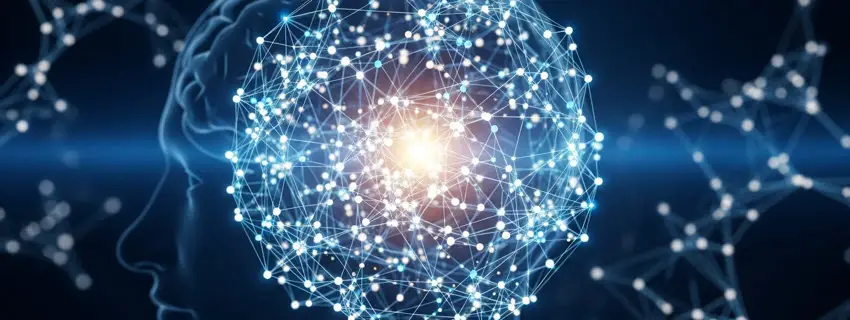
‘Artificial neural networks’, computational systems inspired by the workings of the human brain (*1), represented one of the most important practical applications of the new ‘statistical approach’ in AI. Their conception had deep roots, tracing back to the studies of Warren McCulloch and Walter Pitts in 1943, but for decades they had remained confined to pure theory, as they were far too demanding in terms of data and computing power. A first breakthrough came in 1986, when Geoffrey Hinton, together with David Rumelhart and Ronald Williams, developed the ‘backpropagation’:
Read more
a method that allowed these networks to learn from their own mistakes automatically, progressively improving their performance (*2), much like a child learning to walk. Despite the importance of the discovery, concrete results were slow to arrive due to the persistent limitations of the computers of the era.
It was only toward the end of the 1990s that conditions finally began to change: computers became increasingly powerful and the internet began to make available a quantity of data unimaginable just a short time before.
The revolution of AI, of which neural networks would be one of the main drivers, was drawing near.
Note:
*1: In essence, a software capable of learning from experience, without needing to be explicitly programmed for every individual task.
2: Rumelhart D., Hinton G., Williams R., “Learning Representations by Back-propagating Errors”, Nature, 1986.
1986

2012: the explosion of ‘Deep Learning’ and the birth of modern AI.
From the early 2000s, a new technique would go on to revolutionize Artificial Intelligence, bringing it to a level of power and versatility never achieved before. We are talking about ‘Deep Learning’, or ‘deep learning’ as it is literally translated (*1).
In essence, Deep Learning ‘simulates’ human reasoning and, making use of ‘neural networks’ (computational software that replicates the behavior of biological neurons), processes information in a progressively more complex and abstract way, approaching in this manner the workings of the human brain.
Read more
What made this complex mechanism possible was the convergence of two factors that had until then been severely lacking: the introduction of increasingly powerful computers (*2) and the availability of enormous quantities of data, present on the internet, necessary to ‘train’ (‘teach’, like a child) the new models.
It was in such a context that, in 2012, Professor Geoffrey Hinton and two of his students, Ilya Sutskever and Alex Krizhevsky, took part in ImageNet: an international competition dedicated to image recognition (*3). Their model, called AlexNet and based precisely on ‘deep learning’, crushed the competition by a remarkable margin, reducing the error rate by approximately 11%, compared to the runner-up (*4).
A result, unexpected in many ways, that left the scientific world open-mouthed: Hinton’s ‘deep’ intuition had just demonstrated it could do what no other approach to AI had managed to do before.
Note:
*1: In 2006, Geoffrey Hinton, a British-Canadian computer scientist and cognitive psychologist, had introduced the term and concept of ‘Deep Learning’ with a landmark paper on deep neural networks.
*2: Computers became more powerful thanks to GPUs: the processors of graphics cards originally developed for the gaming industry, which proved extraordinarily effective for training these systems.
*2: I computer diventarono più potenti grazie alle GPU: i processori delle schede grafiche originariamente sviluppate per l’industria videoludica e rivelatesi straordinariamente efficaci per addestrare questi sistemi.
*3: ImageNet Large Scale Visual Recognition Challenge.
2012

The ‘generative’ era, when AI learned to create.
After the breakthrough of 2012, the world of Artificial Intelligence accelerated at a vertiginous pace. Models based on Deep Learning became progressively more sophisticated, until they reached a milestone that just a few years earlier would have seemed pure science fiction: the ability to autonomously generate original content.
The cornerstone of this new edifice was laid in 2014, when Ian Goodfellow, a researcher at the University of Montreal, introduced ‘GANs’, ‘Generative Adversarial Networks’ (*1).
Read more
His idea was simple yet extraordinarily effective: two neural networks would be pitted against each other, one tasked with generating images, the other with identifying their flaws and imperfections. Through constant competition, the first would learn to produce increasingly realistic images, until they became indistinguishable from real ones.
GANs therefore opened a door that would never again be closed: within just a few years, AI would learn to produce photorealistic images (*2), compose original music and generate video … all from a simple text description!
Artificial Intelligence had ceased to be a purely analytical tool, becoming, to all intents and purposes, creative.
Note:
*1: Goodfellow I. et al., “Generative Adversarial Networks”, NeurIPS, 2014.
*2: With systems such as DALL-E (2021), Midjourney (2022) and Stable Diffusion (2022).
2014
The advent of LLMs and ChatGPT, when AI learned to ‘speak’.
Alongside the revolution represented by the generation of multimedia content, generative Artificial Intelligence was also making giant strides in the field of language. The protagonists of this specific evolution were the ‘Large Language Models’, or ‘LLMs’: large-scale language models, trained on colossal quantities of text, capable of generating written language with surprising coherence and naturalness in response to human input. In this case too, we are talking about generative Artificial Intelligence in every respect, applied however to text rather than to images or music.
Of fundamental importance in this context was the development of the first GPT models by OpenAI, a company founded in 2015 by Sam Altman and Elon Musk, among others. Models that, in November 2022, would lead to the launch of ‘ChatGPT’ (*1): the first Artificial Intelligence system with which anyone could converse freely, in natural language, without any technical expertise. In just two months, ChatGPT would reach 100 million users (*2), becoming the fastest-growing technology product in history.
Notes
*1: OpenAI, ChatGPT.
*2: Reuters, “ChatGPT sets record for fastest-growing user base”, February 2023.
2022

‘Transformers’, the engine of LLMs.
The functioning of LLMs, capable of displaying conversational abilities that are nothing short of surprising, is closely tied to an innovative computational architecture introduced in 2017 by a group of Google researchers: the ‘Transformers’ (*1).
Before their arrival, language models processed text sequentially, word by word, like a reader progressing through the pages of a book from beginning to end. A decidedly slow and limited approach, incapable of easily capturing relationships between words that were distant within the content.
Read more
Transformers solved this problem by processing the entire textual sequence simultaneously, while contextually assigning each term a specific ‘weight’ in relation to all the others. This mechanism, known as ‘attention’ (*2), allowed language models to understand context rapidly and in a deep and articulated way, making possible that naturalness in understanding inputs and generating responses that so characterizes them.
Notes:
*1: Vaswani A. et al., “Attention Is All You Need”, NeurIPS, 2017.
*2: The ‘attention’ mechanism allows the model to weigh the relative importance of each word in relation to the others within the context of the sentence.
2017

The history of Artificial Intelligence: a future yet to be written.
The history of Artificial Intelligence is, on reflection, the eventful journey of a decidedly bold and visionary idea that took nearly a century to materialize. From the first theoretical speculations of McCulloch and Pitts in the 1940s, through the pioneering enthusiasm of Dartmouth, to the long ‘winters’ and the explosion of Deep Learning, each of these milestones has contributed to bringing about a technology capable of profoundly shaping the present and future of humanity.
But where exactly will all of this take us? The honest answer is that nobody knows for certain, although many experts, not without a degree of concern, are giving it serious thought. What we do know for certain, however, is that the pace of innovation will show no sign of slowing, quite the contrary, since the evolution of AI will depend increasingly on AI itself and decreasingly on human intervention.

Copyright information.
The images on this page were created using generative Artificial Intelligence tools.